AI Automation Tools: Streamline Your Business with Intelligent Solutions
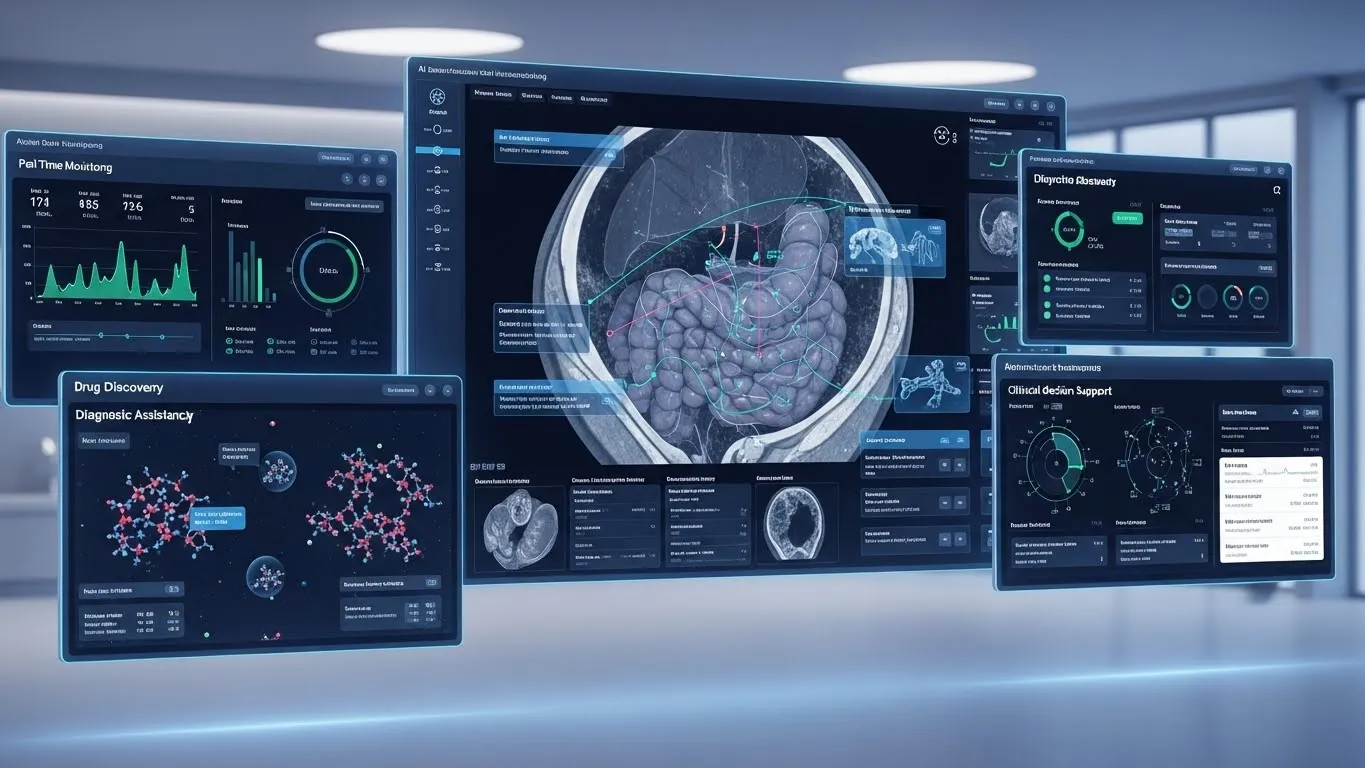
AI Automation Tools: Streamline Your Business with Intelligent Solutions
In today's fast-paced business environment, efficiency and productivity are paramount. Businesses are constantly seeking ways to optimize operations, reduce costs, and gain a competitive edge. This is where AI automation tools emerge as a transformative force. By leveraging artificial intelligence, these intelligent solutions can handle repetitive tasks, analyze vast amounts of data, and even make complex decisions, freeing up human capital for more strategic initiatives. Embracing AI automation is no longer a luxury but a necessity for businesses aiming to streamline operations and unlock new levels of growth.
Key Points
- Enhanced Efficiency: Automate repetitive and time-consuming tasks.
- Cost Reduction: Minimize manual labor costs and operational overhead.
- Improved Accuracy: Reduce human error in data processing and task execution.
- Faster Decision-Making: Gain insights from data analysis for quicker strategic choices.
- Scalability: Easily adapt operations to fluctuating business demands.
Understanding AI Automation Tools and Their Business Impact
AI automation tools integrate artificial intelligence technologies into business processes to perform tasks that traditionally required human intervention. These tools go beyond simple task execution; they learn, adapt, and optimize over time. From customer service chatbots that provide instant support to sophisticated predictive analytics platforms that forecast market trends, AI is fundamentally reshaping how businesses operate. The core value proposition lies in augmenting human capabilities, driving significant improvements in speed, accuracy, and overall operational performance.
The impact of AI automation on businesses is multifaceted. It enables organizations to handle larger volumes of work without a proportional increase in headcount, leading to substantial cost savings. Moreover, by minimizing human error, AI automation ensures greater consistency and reliability in critical business functions. This allows businesses to scale their operations more effectively, responding agilely to market shifts and customer demands. For instance, a retail company can use AI to manage inventory levels dynamically, preventing stockouts and reducing waste.
Benefits of Implementing AI Automation
The advantages of integrating AI automation tools into your business strategy are numerous and impactful. These benefits can be categorized across several key operational areas.
Increased Operational Efficiency
One of the most immediate benefits of AI automation is the significant boost in operational efficiency. Tasks that are repetitive, rule-based, and time-consuming, such as data entry, invoice processing, or scheduling, can be fully automated. This allows employees to dedicate their time to more complex, creative, and strategic responsibilities that require human judgment and problem-solving skills.
- Reduced Task Completion Time: AI can process information and complete tasks at speeds far exceeding human capabilities.
- 24/7 Availability: Automated processes can run continuously without breaks, ensuring constant operational flow.
- Streamlined Workflows: AI can identify bottlenecks and optimize existing workflows for smoother execution.
Significant Cost Reduction
Implementing AI automation tools often leads to substantial cost savings. By reducing the need for manual labor in repetitive tasks, businesses can lower labor costs. Furthermore, the increased accuracy and efficiency of AI can minimize expenses related to errors, rework, and missed opportunities.
- Lower Labor Expenses: Automating tasks reduces the reliance on human resources for routine operations.
- Minimized Errors and Rework: AI's precision leads to fewer mistakes, thus reducing the costs associated with correcting them.
- Optimized Resource Allocation: AI can help in better managing resources, from energy consumption to material procurement.
Enhanced Accuracy and Quality
Human error is an inherent part of manual processes. AI automation tools excel at performing tasks with a high degree of precision and consistency, drastically reducing the incidence of errors. This is particularly crucial in fields like finance, healthcare, and manufacturing, where accuracy is non-negotiable.
- Consistent Performance: AI performs tasks the same way every time, ensuring uniformity.
- Data Integrity: Automated data handling minimizes transcription errors and ensures data accuracy.
- Improved Compliance: By adhering strictly to predefined rules, AI helps maintain regulatory compliance.
Improved Data Analysis and Decision-Making
AI-powered tools can process and analyze vast datasets at an unprecedented scale and speed. This capability provides businesses with deeper insights into customer behavior, market trends, and operational performance. With enhanced data analytics, businesses can make more informed, data-driven decisions, leading to better strategic planning and execution.
- Predictive Analytics: AI can forecast future outcomes based on historical data, aiding in proactive strategies. This is a core aspect of predictive analytics and forecasting.
- Real-time Insights: Gain immediate understanding of critical business metrics.
- Pattern Recognition: Identify subtle patterns in data that might be missed by human analysts.
Greater Scalability and Agility
As businesses grow or market conditions change, their operational capacity needs to adapt. AI automation tools provide a flexible and scalable solution. Automated processes can be easily scaled up or down to meet fluctuating demand without the significant time and cost associated with hiring and training new employees. This agility allows businesses to respond quickly to market opportunities and challenges.
- Adaptable Workloads: Easily adjust automation capacity based on demand.
- Faster Onboarding of New Processes: Implementing AI for new tasks can be quicker than manual setup.
- Global Reach: AI-driven processes can be deployed across different regions seamlessly.
Popular AI Automation Tools and Their Applications
The landscape of AI automation tools is diverse, catering to a wide range of business functions and industries. Understanding these tools and their applications can help businesses identify the best solutions for their specific needs.
Robotic Process Automation (RPA)
RPA tools mimic human actions to interact with digital systems and software. They are excellent for automating rule-based, repetitive tasks that involve structured data.
- Applications: Data entry, form filling, report generation, processing transactions, and migrating data between applications.
- Example: An insurance company can use RPA to automatically extract data from claim forms and input it into their claims management system, significantly speeding up the initial processing phase.
AI-Powered Chatbots and Virtual Assistants
These tools use Natural Language Processing (NLP) and machine learning to understand and respond to human queries. They are crucial for enhancing customer service and internal support.
- Applications: Customer support, answering FAQs, lead qualification, appointment scheduling, and internal IT helpdesk support.
- Example: An e-commerce website can deploy an AI chatbot to handle common customer inquiries about order status, shipping information, and product details, freeing up human agents for more complex issues.
Machine Learning Platforms
Machine learning platforms enable businesses to build, deploy, and manage machine learning models for predictive analytics, pattern recognition, and intelligent decision-making.
- Applications: Fraud detection, personalized recommendations, demand forecasting, customer segmentation, and risk assessment.
- Example: A financial institution can use an ML platform to build a model that detects fraudulent transactions in real-time, protecting both the bank and its customers. This ties directly into the field of predictive analytics and forecasting.
Intelligent Document Processing (IDP)
IDP tools use AI, including OCR (Optical Character Recognition) and NLP, to extract, classify, and validate information from unstructured or semi-structured documents.
- Applications: Processing invoices, purchase orders, legal documents, contracts, and resumes.
- Example: A healthcare provider can use IDP to automatically extract patient information from various medical forms, reducing manual data entry and improving administrative efficiency.
Workflow Automation Platforms
These platforms integrate various AI capabilities to automate end-to-end business processes, orchestrating tasks across different systems and departments.
- Applications: Onboarding new employees, managing project workflows, automating marketing campaigns, and streamlining supply chain operations.
- Example: A manufacturing company can use a workflow automation platform to manage the entire order fulfillment process, from order placement to production scheduling and shipment tracking, ensuring a smooth and efficient operation.
Differentiated Value: Beyond Basic Automation
While many AI automation tools offer standard benefits like efficiency and cost savings, some provide unique advantages that can truly set a business apart.
Proactive Problem Solving and Predictive Maintenance: Moving beyond simply automating existing tasks, advanced AI tools can predict potential problems before they occur. For example, in manufacturing, AI-powered sensors can monitor machinery and predict when a component is likely to fail, allowing for proactive maintenance. This prevents costly downtime and extends the lifespan of equipment, a significant leap from reactive maintenance strategies. According to a report by Deloitte (2024), businesses that adopt predictive maintenance strategies can reduce equipment failure rates by up to 30%.
Hyper-Personalization at Scale: AI enables businesses to offer deeply personalized experiences to their customers, far beyond generic segmentation. By analyzing individual customer data, preferences, and behavior in real-time, AI can dynamically adjust product recommendations, marketing messages, and even website interfaces. This level of tailored engagement fosters stronger customer loyalty and can significantly boost conversion rates. A study published by McKinsey & Company (2025) highlighted that hyper-personalization can increase customer lifetime value by 5-15%. This goes beyond basic marketing automation by creating unique interactions for each customer.
Real-World Case Studies in AI Automation
The adoption of AI automation tools has yielded tangible results across various industries.
Case Study: Financial Services Fraud Detection: A major credit card company implemented an AI-powered fraud detection system. This system analyzes transaction patterns in real-time, identifying anomalies indicative of fraudulent activity with greater accuracy and speed than previous rule-based systems. The result was a significant reduction in financial losses due to fraud and an improved customer experience due to fewer legitimate transactions being flagged incorrectly. Data from the International Journal of AI Research (2023) indicates that AI-driven fraud detection can improve detection rates by up to 20%.
Case Study: Healthcare Patient Onboarding: A large hospital network utilized an intelligent document processing solution to automate patient registration and insurance verification. By automatically extracting information from various admission forms and cross-referencing it with insurance databases, the system dramatically reduced the time patients spent waiting and minimized administrative errors. This led to improved patient satisfaction and a more efficient allocation of administrative staff.
Implementing AI Automation Tools Effectively
To successfully integrate AI automation tools, businesses should adopt a strategic approach.
1. Identify Key Business Processes for Automation
Start by analyzing your current business processes. Pinpoint those that are repetitive, time-consuming, prone to errors, or represent significant bottlenecks. Prioritize processes where automation can deliver the most substantial ROI.
2. Define Clear Objectives and KPIs
What do you aim to achieve with AI automation? Set specific, measurable, achievable, relevant, and time-bound (SMART) goals. Key performance indicators (KPIs) could include metrics like reduction in task completion time, decrease in error rates, or improvement in customer satisfaction scores.
3. Choose the Right Tools and Technologies
Research and select AI automation tools that align with your identified processes and objectives. Consider factors such as ease of integration, scalability, vendor support, and cost. It's often beneficial to start with a pilot project in a specific area before a full-scale rollout.
4. Ensure Data Quality and Governance
AI tools are only as good as the data they process. Ensure your data is clean, accurate, and well-governed. Establish clear policies for data collection, storage, and usage to maintain integrity and compliance.
5. Foster Employee Adoption and Training
Address any concerns employees may have about automation. Provide adequate training to equip them with the skills needed to work alongside AI tools and focus on higher-value tasks. Emphasize how AI can augment their roles, not replace them.
6. Monitor, Iterate, and Optimize
Once implemented, continuously monitor the performance of your AI automation solutions. Collect feedback, analyze KPIs, and iterate on your strategies. AI systems can be continuously improved through ongoing learning and adaptation.
The Future of AI Automation in Business
The evolution of AI automation is relentless. We can expect even more sophisticated tools that offer greater autonomy, enhanced predictive capabilities, and seamless integration across all business functions. The ongoing advancements in areas like generative AI and explainable AI will further expand the possibilities for intelligent automation, enabling businesses to achieve unprecedented levels of efficiency and innovation. Staying informed about the latest trends in predictive analytics and AI will be crucial for sustained competitive advantage.
Frequently Asked Questions About AI Automation Tools
Q1: What is the primary benefit of AI automation tools for small businesses? A1: For small businesses, the primary benefit is leveling the playing field. AI automation tools can handle tasks that would otherwise require significant manual effort or specialized staff, allowing them to operate more efficiently and compete with larger enterprises on service and speed.
Q2: How can AI automation improve customer service? A2: AI automation enhances customer service through chatbots that provide instant, 24/7 support for common queries. It also enables personalized recommendations and proactive issue resolution, leading to higher customer satisfaction and loyalty.
Q3: Is AI automation expensive to implement? A3: The cost of AI automation varies widely. While some advanced solutions can be a significant investment, many cloud-based AI tools and RPA platforms are offered on a subscription basis, making them accessible even for smaller budgets, especially when considering the long-term ROI.
Q4: What is the role of data in AI automation? A4: Data is the fuel for AI automation. The quality, quantity, and relevance of data directly impact an AI system's ability to learn, make accurate predictions, and perform tasks effectively. Robust data governance is essential for successful AI implementation.
Conclusion: Embrace Intelligent Solutions for Business Growth
AI automation tools are transforming the business landscape, offering unparalleled opportunities for streamlining operations, reducing costs, and driving innovation. By carefully selecting and strategically implementing these intelligent solutions, businesses of all sizes can unlock new levels of efficiency and gain a significant competitive edge. The journey towards intelligent automation is an ongoing one, requiring continuous learning and adaptation, but the rewards in terms of productivity and growth are substantial.
Are you ready to explore how AI automation can revolutionize your business? Share your thoughts in the comments below or subscribe to our newsletter for more insights into the latest AI trends and strategies. For readers interested in the analytical aspects, we recommend exploring our articles on predictive analytics and forecasting to understand the data-driven foundation of many AI tools.
Explore further:
- Understanding the nuances of machine learning in business applications.
- Deep dives into specific AI tool categories like natural language processing.
- Case studies on digital transformation powered by AI.