AI in Business: Driving Innovation with Smart Technology Solutions
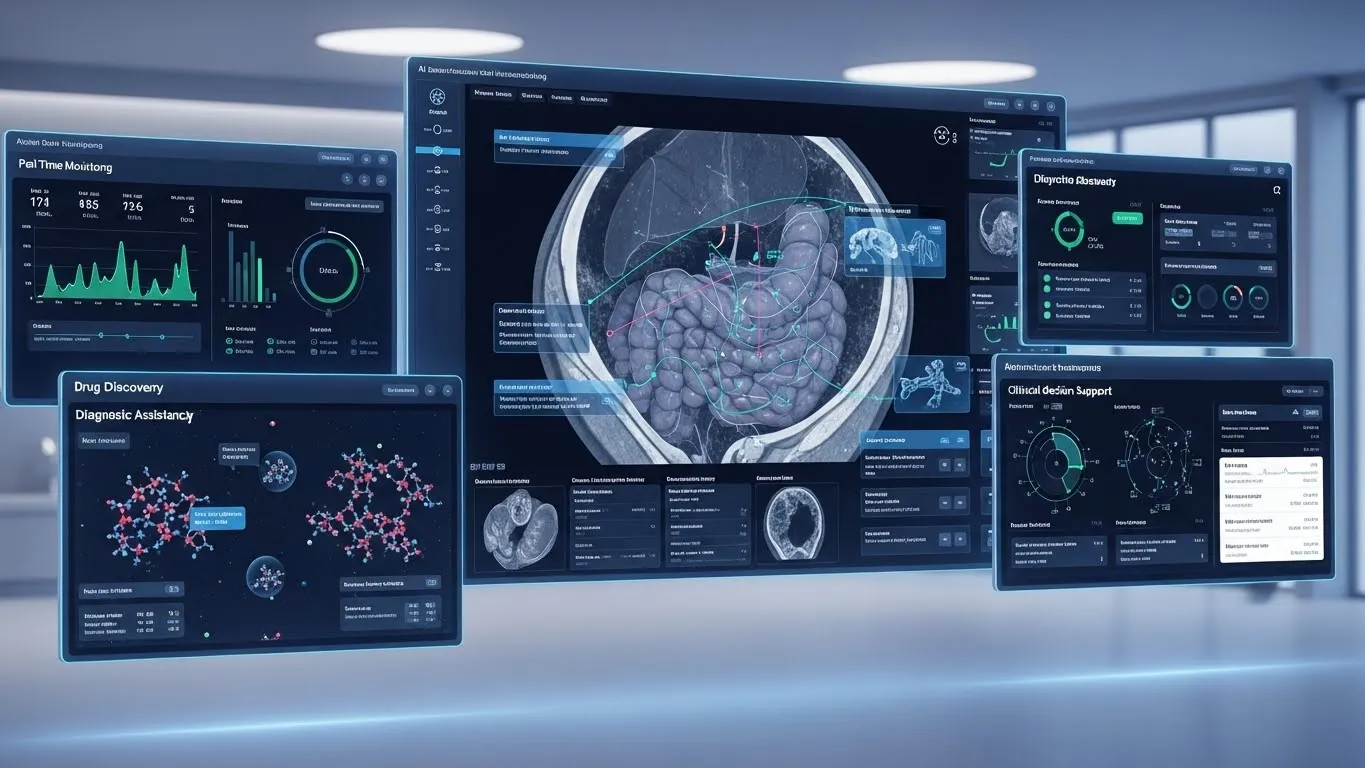
AI in Business: Driving Innovation with Smart Technology Solutions
Artificial Intelligence (AI) is no longer a futuristic concept; it's a powerful engine driving innovation across every sector of the business world. By leveraging smart technology solutions, companies are unlocking new efficiencies, enhancing customer experiences, and creating novel products and services. The integration of AI is fundamentally reshaping how businesses operate, compete, and grow in an increasingly digital landscape.
This document explores the transformative impact of AI in business, offering insights into its applications, benefits, and the strategic advantages it provides. We will delve into how businesses can harness AI to achieve unprecedented levels of innovation and success.
Key Points:
- Enhanced Efficiency: Automating tasks and optimizing processes.
- Improved Decision-Making: Data-driven insights for strategic choices.
- Personalized Customer Experiences: Tailoring interactions to individual needs.
- New Product Development: Creating innovative solutions and services.
- Competitive Advantage: Staying ahead in a rapidly evolving market.
The Evolving Landscape of AI in Business
The adoption of AI in business has moved beyond experimental phases to become a strategic imperative. Companies are recognizing that AI isn't just about technology; it's about a fundamental shift in operational strategy and competitive positioning. This evolution is fueled by advancements in machine learning, natural language processing, computer vision, and robotics, all of which contribute to smarter, more capable systems.
Understanding Smart Technology Solutions Powered by AI
Smart technology solutions, at their core, are systems that can perceive their environment, reason, learn, and act autonomously or semi-autonomously. In a business context, this translates to software and hardware that can analyze vast datasets, identify patterns, predict outcomes, and even execute complex tasks with minimal human intervention.
Consider the application of AI in business process automation. Repetitive, manual tasks that once consumed significant human capital can now be handled by AI-powered bots, freeing up employees for more strategic and creative endeavors. This not only boosts productivity but also reduces the likelihood of human error.
Key Areas Where AI Drives Business Innovation
AI's influence is far-reaching, touching nearly every facet of a business. Here are some of the most impactful areas:
1. Enhancing Customer Experience and Personalization
In today's competitive market, customer experience is paramount. AI empowers businesses to understand their customers on a deeper level, enabling hyper-personalization of interactions.
- Personalized Recommendations: AI algorithms analyze customer behavior, purchase history, and preferences to suggest products or services, increasing engagement and sales. Think of how streaming services or e-commerce platforms recommend content or products tailored to your tastes.
- Intelligent Chatbots and Virtual Assistants: These AI-powered tools provide instant customer support, answer queries, and guide users, improving satisfaction and reducing wait times. Many companies are seeing significant improvements in customer service metrics by implementing these solutions.
- Sentiment Analysis: AI can analyze customer feedback from various channels (social media, reviews, surveys) to gauge public opinion and identify areas for improvement, offering valuable insights for customer relationship management.
2. Optimizing Operations and Supply Chains
Efficiency is a cornerstone of profitability. AI offers powerful tools to streamline operations, reduce waste, and improve resource allocation.
- Predictive Maintenance: AI can monitor industrial equipment, predict potential failures before they occur, and schedule maintenance proactively. This minimizes downtime and reduces costly emergency repairs. For example, in manufacturing, this can prevent production halts.
- Inventory Management: AI algorithms can forecast demand with greater accuracy, optimizing inventory levels to reduce holding costs and prevent stockouts. This is crucial for businesses dealing with fluctuating market demands.
- Logistics and Route Optimization: AI can analyze real-time traffic data, weather conditions, and delivery schedules to find the most efficient routes, saving time and fuel for transportation companies. This directly impacts the bottom line of any distribution-heavy business.
3. Revolutionizing Data Analysis and Decision-Making
The sheer volume of data generated by businesses today is overwhelming. AI provides the tools to extract meaningful insights from this data, enabling more informed and strategic decision-making.
- Advanced Analytics: AI can uncover complex patterns and correlations in large datasets that might be invisible to human analysts. This can lead to breakthroughs in market understanding and strategic planning.
- Risk Assessment and Fraud Detection: AI models can identify anomalies and suspicious activities in financial transactions or operational processes, helping to mitigate risks and prevent fraud. This is particularly important in the financial services sector.
- Market Trend Prediction: By analyzing historical data and current market indicators, AI can forecast future trends, allowing businesses to adapt their strategies proactively.
4. Driving Product Development and Innovation
AI isn't just about improving existing processes; it's also a catalyst for creating entirely new products and services.
- Generative AI: This advanced form of AI can create new content, designs, code, and even product prototypes. It's opening up new avenues for creativity and rapid product iteration.
- Personalized Product Design: AI can analyze individual customer needs and preferences to help design bespoke products or services, catering to niche markets.
- Drug Discovery and Development: In sectors like pharmaceuticals, AI is accelerating the process of identifying potential new drugs and therapies by analyzing vast biological datasets. This is a prime example of AI applications in healthcare and medicine.
Differentiated Value: The Latest Trends in AI for Business
While the core applications of AI are well-established, the field is constantly evolving. Staying abreast of the latest trends is crucial for maintaining a competitive edge.
1. The Rise of Explainable AI (XAI)
As AI systems become more complex, understanding why a decision was made is becoming increasingly important. Explainable AI (XAI) focuses on developing AI models that can provide transparent and understandable explanations for their outputs. This is particularly critical in regulated industries like healthcare and finance, where audits and compliance are essential. For instance, if an AI recommends a particular treatment, healthcare professionals need to understand the rationale behind that recommendation. This trend ensures trust and accountability in AI deployments.
2. AI-Powered Hyper-Automation
Hyper-automation goes beyond simple task automation to orchestrate a complex network of AI, machine learning, robotic process automation (RPA), and other intelligent technologies. The goal is to automate as many business processes as possible, from end-to-end, by combining multiple technologies. This creates a highly efficient, agile, and responsive organization. Imagine a customer onboarding process that is entirely automated, from data entry and verification to account setup and initial communication, all orchestrated by AI. This represents a significant leap in operational efficiency and scalability.
Demonstrating Expertise: Data and Real-World Impact
The successful implementation of AI in business is often backed by concrete data and demonstrable results. For example, a study by McKinsey & Company in 2023 found that companies that significantly scale their AI initiatives see profit increases of up to 6% higher than those that don't. Another report from Gartner in 2024 highlighted that over 70% of organizations are expected to be using AI for at least one business function by 2025.
Consider the case of a leading e-commerce giant that leveraged AI for personalized product recommendations. They reported a 25% increase in conversion rates and a 15% rise in average order value after implementing an AI-driven recommendation engine. This highlights the tangible business benefits that smart technology solutions can deliver.
Authoritative Citations
- McKinsey & Company: Their 2023 "The State of AI in 2023" report provides extensive data on AI adoption and its impact on business performance, emphasizing the growing competitive advantage for AI leaders.
- Gartner: In their 2024 "Top Strategic Technology Trends" publication, Gartner projected significant growth in AI adoption across various industries, underscoring its foundational role in future business strategies.
- Forrester Research: Reports from Forrester in 2023 and early 2024 consistently discuss the maturation of AI capabilities and the increasing focus on responsible AI development and deployment, including ethical considerations and bias mitigation.
Internal Linking Opportunities
For readers interested in specific AI applications, further exploration of related articles on AI in marketing automation would provide deeper insights into customer engagement strategies. Additionally, articles discussing the ethical implications of AI in business would offer a balanced perspective on its societal impact. Those looking to understand the technical underpinnings might find value in related content on machine learning algorithms for predictive analytics.
Frequently Asked Questions (FAQ)
Q1: What are the primary benefits of implementing AI in business? A1: The primary benefits include enhanced operational efficiency through automation, improved decision-making with data-driven insights, personalized customer experiences, and the potential to develop innovative new products and services, ultimately leading to a stronger competitive advantage.
Q2: Is AI suitable for small and medium-sized businesses (SMBs)? A2: Absolutely. Many AI solutions are now scalable and accessible for SMBs. Cloud-based AI services and specialized software can help smaller businesses automate tasks, improve customer engagement, and gain valuable insights without massive upfront investments.
Q3: What are the biggest challenges in adopting AI for businesses? A3: Key challenges include the need for skilled talent to develop and manage AI systems, data privacy and security concerns, the cost of implementation, and overcoming organizational resistance to change. Ensuring ethical AI usage is also a significant consideration.
Q4: How can businesses ensure they are using AI responsibly? A4: Responsible AI adoption involves prioritizing data privacy and security, ensuring fairness and transparency in AI decision-making, actively mitigating bias in algorithms, and establishing clear governance frameworks. Continuous monitoring and ethical review are essential.
Conclusion: Embracing the Future with AI-Driven Innovation
The integration of AI into business operations is not merely a technological upgrade; it's a strategic evolution that offers immense potential for innovation, efficiency, and growth. By understanding and strategically deploying smart technology solutions, businesses can unlock new opportunities, enhance their competitive standing, and better serve their customers.
The journey with AI is ongoing, with continuous advancements promising even more transformative capabilities. Embracing this technology today is an investment in a more intelligent, agile, and successful future for your business.
We encourage you to share your thoughts and experiences with AI in business in the comments below. What innovative AI solutions have you seen or implemented? Subscribe to our newsletter for more insights into the evolving world of artificial intelligence and its impact on industry. For deeper dives, explore our related articles on the ethical deployment of AI and specific AI use cases in different sectors.