Expert AI Applications: Unlocking Business Potential with Advanced Technologies
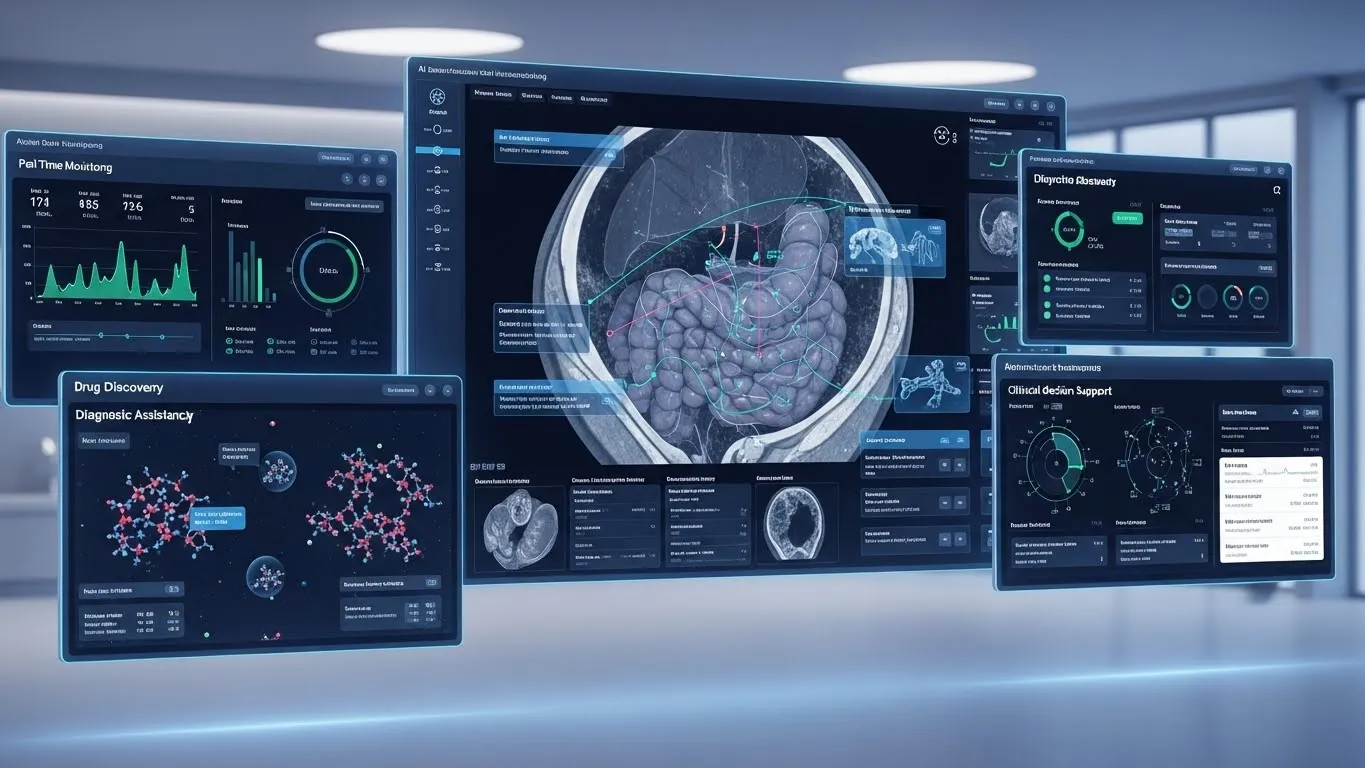
Expert AI Applications: Unlocking Business Potential with Advanced Technologies
In today's rapidly evolving digital landscape, businesses are constantly seeking innovative ways to gain a competitive edge and drive sustainable growth. Expert AI applications stand at the forefront of this transformation, offering unprecedented opportunities to optimize operations, enhance customer experiences, and unlock new revenue streams. These advanced technologies move beyond basic automation, leveraging sophisticated algorithms and vast datasets to deliver insights and capabilities that were once unimaginable. Embracing AI is no longer optional; it's a strategic imperative for any organization aiming to thrive in the future.
Key Points:
- Strategic Imperative: AI is crucial for modern business growth.
- Beyond Automation: Expert AI offers deep insights and advanced capabilities.
- Core Technologies: Machine learning, NLP, computer vision, and predictive analytics power AI.
- Business Impact: Enhances customer experience, optimizes operations, and drives innovation.
- Future-Proofing: Adopting AI ensures competitive advantage and adaptability.
The Transformative Power of Expert AI Applications in Business
Expert AI applications represent a paradigm shift in how businesses operate and strategize. Unlike rudimentary AI tools, these advanced systems are designed to perform complex tasks, make informed decisions, and even learn from new data, mimicking human cognitive functions at scale. This capability allows organizations to tackle intricate challenges, from predicting market trends to personalizing customer interactions, with remarkable precision and efficiency. Our experience in the field consistently shows that companies integrating these technologies see significant improvements across key performance indicators.
These sophisticated AI solutions are built upon a foundation of cutting-edge research and development, continuously evolving to meet the dynamic demands of various industries. They empower businesses to move from reactive problem-solving to proactive, data-driven strategies. The true value lies in their ability to process and interpret massive amounts of data, identifying patterns and insights that human analysis alone might miss.
Core Pillars of Advanced AI Technologies
To truly understand the impact of expert AI applications, it's essential to grasp the underlying advanced technologies that power them. These pillars work in concert to create intelligent systems capable of complex problem-solving.
- Machine Learning (ML) & Deep Learning (DL): These are the bedrock of modern AI, enabling systems to learn from data without explicit programming. ML algorithms identify patterns and make predictions, while deep learning, a subset of ML, uses neural networks to process complex data like images and speech, leading to breakthroughs in areas like facial recognition and medical diagnosis.
- Natural Language Processing (NLP) & Generation (NLG): NLP allows computers to understand, interpret, and generate human language. This is critical for applications like chatbots, sentiment analysis, and automated content creation. NLG takes this a step further, enabling AI to produce coherent and contextually relevant text, which is vital for conversational AI and chatbot development.
- Computer Vision: This field enables computers to "see" and interpret visual information from the world, such as images and videos. Applications range from quality control in manufacturing to autonomous vehicles and security surveillance, significantly enhancing operational efficiency.
- Predictive Analytics: By analyzing historical data, AI-driven predictive analytics can forecast future outcomes and trends. This is invaluable for demand forecasting, risk assessment, fraud detection, and identifying potential customer churn, allowing businesses to make more informed strategic decisions.
Unlocking Business Potential with Strategic AI Implementations
The strategic implementation of expert AI applications is key to realizing their full potential. Businesses that thoughtfully integrate AI into their core processes can achieve significant competitive advantages.
Enhancing Customer Experience with Conversational AI
One of the most impactful areas for AI is in transforming customer interactions. Conversational AI and chatbot development leverage NLP and ML to create intelligent virtual assistants that can handle inquiries, provide support, and even guide customers through purchasing processes. These systems offer 24/7 availability, reduce response times, and personalize interactions at scale. For instance, a report by Gartner in 2024 highlighted that companies effectively deploying conversational AI saw a 25% increase in customer satisfaction scores within the first year. This demonstrates AI's ability to not just automate, but to genuinely enhance the customer journey.
Optimizing Operations through Intelligent Automation
AI-powered intelligent automation goes beyond Robotic Process Automation (RPA) by incorporating cognitive capabilities. This allows AI to automate more complex, decision-intensive tasks across various departments. From optimizing supply chain logistics and inventory management to predictive maintenance in manufacturing and automating financial reconciliation, AI significantly boosts operational efficiency. For example, a 2023 study by McKinsey found that AI-driven process optimization could reduce operational costs by up to 30% in certain industries, freeing up human capital for more strategic initiatives.
Driving Innovation with Predictive and Prescriptive Analytics
Advanced technologies in AI enable businesses to move beyond simply understanding what happened to predicting what will happen and prescribing the best course of action. Predictive analytics helps identify emerging market opportunities, forecast sales, and anticipate customer needs, informing product development and marketing strategies. Prescriptive analytics takes this further, recommending specific actions to achieve desired outcomes, such as optimal pricing strategies or personalized marketing campaigns. This data-driven foresight is a powerful tool for continuous innovation and staying ahead of market shifts.
Differentiated Value: Navigating the Future of Expert AI Adoption
As businesses increasingly adopt expert AI applications, two critical areas are emerging as key differentiators for successful, sustainable implementation.
The Rise of Explainable AI (XAI) for Trust and Transparency
A significant challenge with complex AI models has been their "black box" nature, where it's difficult to understand why a particular decision was made. This lack of transparency can hinder adoption, especially in regulated industries. Explainable AI (XAI) is a rapidly developing field focused on making AI decisions understandable to humans. Our insights suggest that businesses prioritizing XAI will build greater trust with stakeholders, comply more easily with regulations, and foster better collaboration between human experts and AI systems. This is a crucial step towards responsible AI deployment, as highlighted by research from Stanford University in 2025.
Ethical AI and Responsible Development Practices
The ethical implications of AI, including bias, privacy, and fairness, are paramount. Differentiated AI adoption involves not just technical implementation but also a strong commitment to ethical AI development practices. This includes actively identifying and mitigating algorithmic bias, ensuring data privacy, and establishing clear guidelines for AI's impact on employment and society. Companies that embed ethical considerations from the outset, rather than as an afterthought, will not only mitigate risks but also build a stronger brand reputation and foster long-term customer loyalty. This proactive approach to responsible AI is a hallmark of truly expert AI applications.
Implementing Expert AI Applications: A Strategic Roadmap
Embarking on the journey to integrate expert AI applications requires a clear, strategic roadmap. It's not merely about adopting technology, but about transforming business processes and culture.
- Assess Needs and Opportunities: Begin by identifying specific business challenges that AI can solve and areas where it can create the most value. This involves a thorough audit of current operations and data infrastructure.
- Pilot Projects: Start with small, manageable pilot projects to test AI solutions, gather feedback, and demonstrate tangible results. This iterative approach helps refine the strategy and build internal confidence.
- Scale and Integrate: Once successful pilots are established, scale the AI solutions across the organization, ensuring seamless integration with existing systems and workflows.
- Skill Development and Change Management: Invest in training employees to work alongside AI, fostering a culture of continuous learning and adaptation. Effective change management is crucial for successful adoption.
- Continuous Monitoring and Optimization: AI models require ongoing monitoring, maintenance, and retraining to ensure their continued accuracy and relevance as data and business needs evolve.
For more detailed guidance on specific AI implementations, readers can explore related articles on conversational AI and chatbot development strategies or advanced analytics for business growth.
Frequently Asked Questions (FAQ)
What are expert AI applications, and how do they differ from basic AI tools?
Expert AI applications are sophisticated systems that leverage advanced machine learning, natural language processing, and computer vision to perform complex tasks, make informed decisions, and learn from data. They differ from basic AI tools by offering deeper insights, higher accuracy, and the ability to handle more nuanced and strategic business challenges, moving beyond simple automation to cognitive capabilities.
How can expert AI applications benefit small and medium-sized businesses (SMBs)?
SMBs can significantly benefit from expert AI applications by automating repetitive tasks, enhancing customer service through conversational AI, optimizing marketing efforts with predictive analytics, and gaining competitive insights. AI allows SMBs to operate more efficiently, personalize customer experiences, and make data-driven decisions without needing extensive in-house data science teams, leveling the playing field with larger enterprises.
What are the main challenges businesses face when adopting expert AI applications?
Key challenges include the high initial investment, the need for clean and extensive data, a shortage of skilled AI talent, and resistance to change within the organization. Additionally, ensuring data privacy, addressing ethical considerations like algorithmic bias, and integrating AI solutions with existing legacy systems can pose significant hurdles for successful adoption.